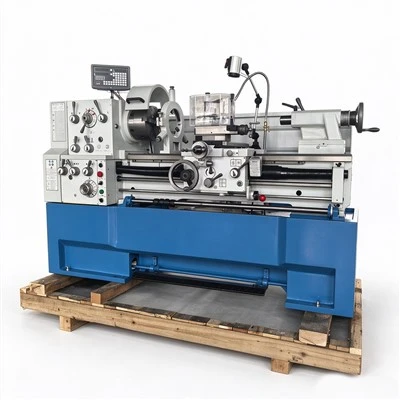
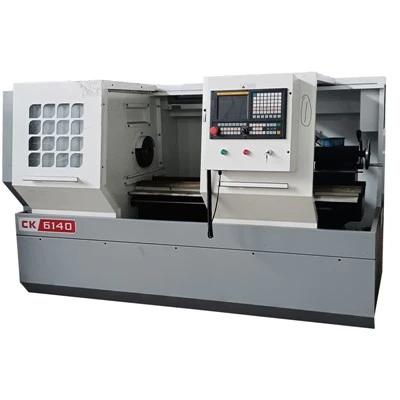
The guide rails on CNC lathes are broadly categorized into two types: hard rails and linear rails. Each type possesses its own distinct advantages and disadvantages. Because hard rails feature a larger contact area compared to linear rails, they facilitate smoother machine operation; consequently, they are well-suited for applications where strict requirements regarding machine vibration are paramount. Furthermore, hard rails on CNC machines offer a higher load-bearing capacity, making them ideal for less precision-critical machining tasks that involve heavy cutting loads and high feed rates. Conversely, CNC lathes equipped with hard rails exhibit slower travel speeds-a direct consequence of the extensive contact friction surface inherent to this guide rail design-rendering them unsuitable for high-tempo, rapid-cycle operations. Linear rails on CNC lathes present the exact opposite characteristics: they offer relatively higher precision and faster travel speeds, making them the preferred choice for precision machining applications where both accuracy and efficiency are critical requirements.
If the lubrication of hard rails is inadequate, it can lead to rail seizure or excessive wear, causing significant detriment to the machine tool's overall precision. Additionally, hard rails can suffer from material non-uniformity-often a result of the casting process-which may introduce casting defects such as sand inclusions, blowholes, or porosity within the material structure. Should these defects be present on the guide rail surface, they will inevitably compromise both the operational lifespan and the precision of the equipment. Furthermore, hard rails present greater manufacturing challenges; in many instances, this type of guide rail is cast integrally with the machine tool's bed structure.
Consequently, the production process demands rigorous adherence to strict tolerances regarding geometric shape and position, as well as precise execution of casting aging treatments and surface hardening processes; failure to meet these exacting standards will result in machined components that fall short of quality specifications. Under identical conditions of maintenance and operation, the service life of a hard-rail machine tool is generally shorter than that of a linear-rail machine. This disparity arises because hard rails operate via sliding friction, whereas linear rails utilize rolling friction; from the perspective of frictional forces, hard rails are subject to a significantly larger friction surface area than linear rails. Conversely, the ultimate precision and rigidity of a linear-rail machine tool are predominantly influenced by the quality of the installation process, as well as the experience and proficiency of the installation technician.
Ultimately, the selection of a CNC machine tool should be determined based on one's specific machining requirements. We sincerely hope that everyone succeeds in selecting the ideal machine tool to meet their needs-one that serves to elevate machining quality and enables the delivery of products that fully satisfy their customers.
We also warmly invite you to leave comments and engage in further discussion!