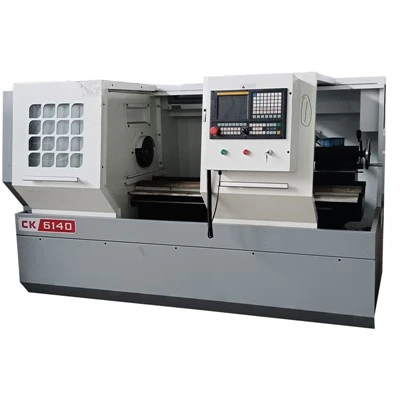
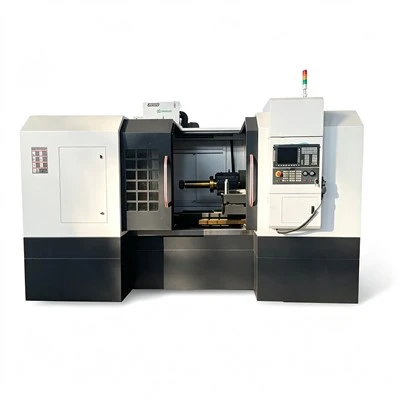
A machining center is a piece of equipment featuring a highly integrated CNC system; its high machining precision and efficiency are indisputable facts. However, like any machining equipment, it requires specific operational techniques. This article briefly outlines some key operational techniques for machining centers:
A skilled operator must fully understand the part specifications, process routing, and machine tool characteristics before operating the machine to execute various machining tasks.
1) Fixtures should consist of as few components as possible while maintaining high rigidity.
2) Ensure that all machining operations on the workpiece can be completed within the spindle's travel range.
3) Regarding the contact between the fixture base and the machine table: the flatness of the fixture base must be maintained within 0.01–0.02 mm, and the surface roughness should not exceed Ra 3.2 μm.
4) Ensure consistent orientation during installation so that the part's position aligns with the workpiece coordinate system and machine coordinate system selected during programming.
5) The fixture should allow for quick reconfiguration to suit new workpieces. Since auxiliary time in machining centers is minimized, the loading and unloading of fixtures must not consume excessive time.
6) For machining centers equipped with pallet changers (shuttle tables), the fixture design must prevent spatial interference with the machine tool during movements such as table shifting, lifting, lowering, and rotation.
7) Fixtures should be designed with an open structure; clamping elements should be kept as low as possible, and the fixture setup must not interfere with the tool paths of the machining operations.
8) Aim to complete all machining operations in a single setup. If clamping points must be changed, take special care to ensure that the repositioning does not compromise location accuracy; if necessary, document this requirement in the process specifications.
9) To simplify positioning and installation, every locating surface on the fixture should have precise coordinate dimensions relative to the machining center's machining origin.