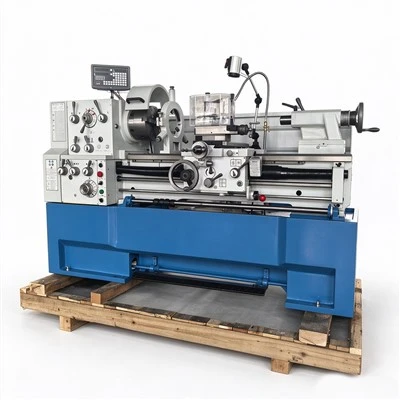
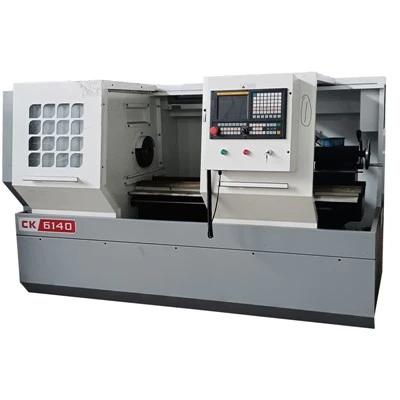
Amid the industry-wide drive to enhance quality and efficiency, the turning and milling lathe machine has emerged as vital equipment for enterprises seeking to optimize production lines and boost competitiveness, thanks to their ability to integrate processes and synchronize precision. By seamlessly combining turning and milling operations, they offer an effective solution for machining complex parts.
Basic Concepts of Turning and Milling Lathe Machine
The turning and milling lathe machine is multifunctional machining systems developed from CNC technology, capable of performing various operations-such as external turning, face milling, drilling, and tapping-in a single setup. Their core strengths lie in multi-axis linkage control systems and composite turret structures; these features minimize workpiece transfer and eliminate errors associated with repeated positioning, making them particularly well-suited for the precision manufacturing of shafts, discs, sleeves, and irregularly shaped components.
Practical Value of Process Integration
Enterprises adopting turning and milling lathe machine typically report a significant simplification of production workflows. Workpieces no longer need to be shuttled between lathes and milling machines; fewer setups lead to improved positioning accuracy, with notable gains in machining stability for slender or thin-walled parts. Additionally, the equipment features a compact footprint and reduced auxiliary processing time, optimizing overall efficiency and saving on labor and time costs.
Typical Industry Applications
In the aerospace sector, components such as engine rotors and impellers often require precision machining on multiple surfaces; turning and milling lathe machine excel here by rapidly executing complex surface milling and center-hole turning. The medical device industry relies on their single-setup forming capabilities to ensure surface quality and dimensional consistency for high-precision, small-batch parts like bone plates and dental implants. These machines are also widely used in the production of automotive transmission components, hydraulic valve bodies, and precision molds.
Practical Guidelines for Equipment Selection
When purchasing a turning and milling lathe machine, enterprises should first assess their specific product material characteristics, size ranges, and precision requirements. Key parameters-such as spindle speed range, tool interface type, and control system openness-should be evaluated to ensure compatibility with existing processes. Factors like user-friendly interfaces and ease of programming also impact daily operational efficiency. It is advisable to prioritize suppliers offering comprehensive technical service and spare parts support, and to evaluate equipment performance firsthand through test cuts on sample parts.
Overall, through process integration and technological evolution, turning and milling lathe machine tools effectively address the multifaceted demands of modern manufacturing for efficiency, precision, and flexibility. The judicious application of such equipment enables enterprises to optimize their production structures, enhance product competitiveness, and make steady progress amidst industrial upgrading.