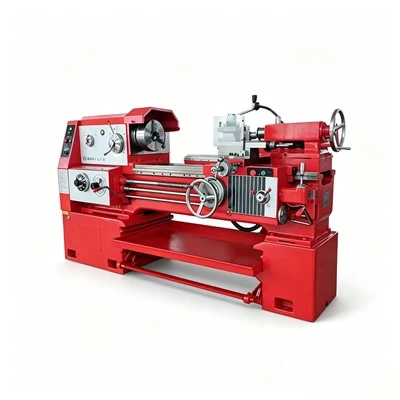
Precision shaft components are widely used in fields such as hydraulics, pneumatics, automation equipment, electric motors, and precision instruments, demanding strict standards for dimensional tolerance, roundness, cylindricity, and surface finish. Traditional flat-bed lathes struggle to meet the requirements for high-precision, high-efficiency finishing due to issues like insufficient rigidity during high-speed feed, poor chip evacuation, and significant thermal deformation. In contrast, CNC slant-bed lathes-featuring a slanted bed structure, high-rigidity drive systems, and stable high-speed feed capabilities-are ideally suited for the high-speed finishing of precision shafts and have become the mainstream equipment for the mass production of small precision parts.
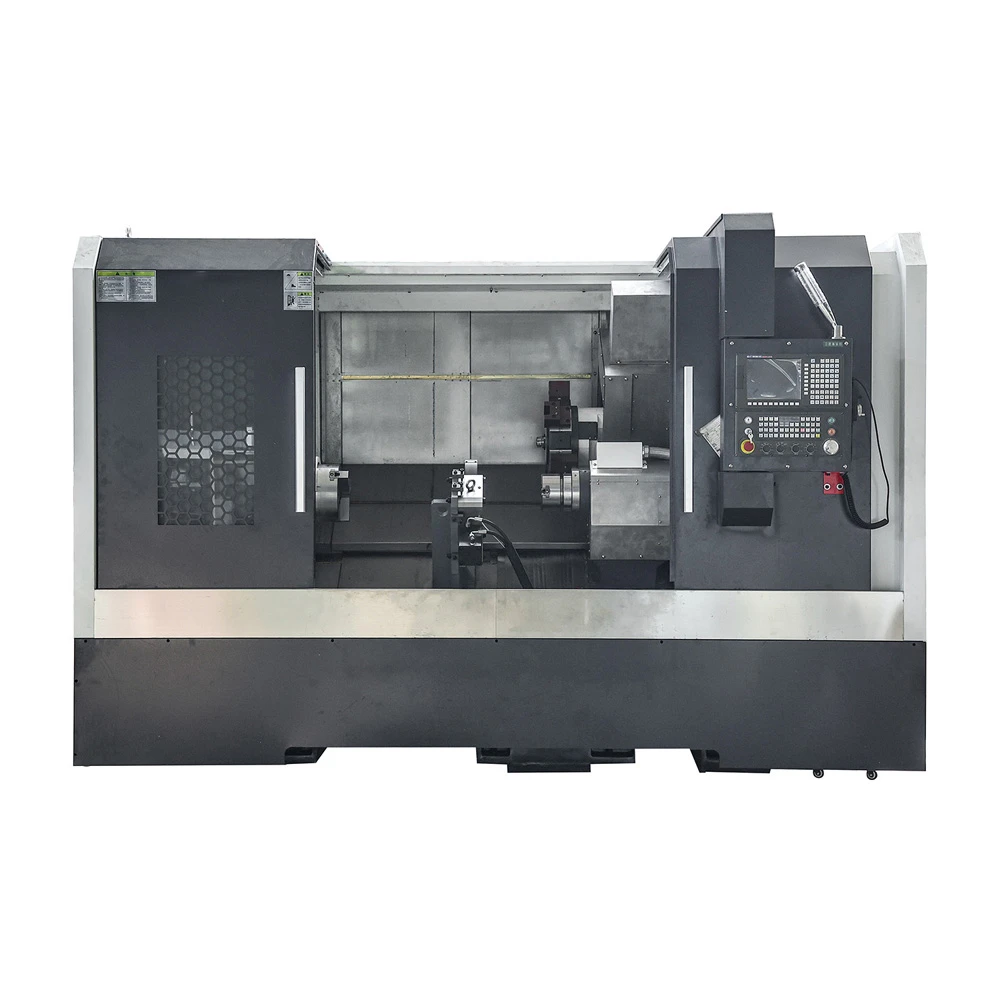
The unique structural advantages of slant-bed lathes provide the foundation for high-speed precision turning of shafts. Compared to flat-bed models, the slant-bed design offers superior overall rigidity and uniform load distribution; vibration amplitude during high-speed cutting is minimal, effectively preventing tool marks or chatter marks on the shafts. Furthermore, the slanted guideway structure facilitates natural chip evacuation; gravity causes chips to slide away quickly rather than accumulating in the machining zone. This eliminates surface scratches and thermal damage caused by hot chips rubbing against the workpiece, thereby significantly improving the surface finish of the shaft's outer diameter and end faces. Additionally, the equipment features high spindle speeds and stable rotational accuracy, enabling the high-speed machining of thin-walled and slender shafts without deformation.
These machines offer significant advantages in terms of process suitability for precision shaft finishing. To address the tendency of slender, stepped, and miniature precision shafts to deform, slant-bed lathes provide rapid feed response and excellent servo tracking. This allows for micro-feed and constant-speed cutting, effectively reducing cutting stress and deformation caused by extrusion forces. The equipment supports high-precision coordinate positioning and tool-tip wear compensation, enabling real-time correction of minute dimensional drifts associated with high-speed machining. This ensures consistent workpiece dimensions and maintains roundness and cylindricity at the micron level, meeting the stringent requirements for precision assembly fits.
Optimizing process parameters can further enhance the quality of the finished components. The high-speed finish turning process adheres to principles of high spindle speed, shallow depth of cut, and low feed rate to minimize the accumulation of cutting heat and workpiece deformation. A finishing allowance of 0.1 mm to 0.2 mm is left during rough machining, allowing internal material stresses to be fully relieved before high-speed finishing begins. Coated carbide tools are selected to reduce tool tip wear and the formation of built-up edges, while an ample supply of cutting fluid rapidly dissipates heat, preventing issues such as thermal deformation and excessive surface roughness in shaft components.
Furthermore, slant-bed lathes offer a high degree of automation; they can be equipped with automatic bar feeders, servo tailstocks, and high-precision hydraulic chucks to enable continuous, automated finishing of shaft components. With high turret positioning accuracy and rapid tool-changing capabilities, the equipment performs complex, multi-operation machining-including external turning, facing, chamfering, and contouring-in a single setup. This minimizes positioning errors associated with re-clamping, significantly boosts production efficiency and product interchangeability, and is ideally suited for the standardized, high-volume production of precision shafts.
In summary, CNC slant-bed lathes-leveraging core advantages such as high rigidity, low vibration, efficient chip evacuation, and high precision-effectively resolve process challenges in the high-speed finishing of precision shafts, such as excessive deformation, poor surface finish, and dimensional instability. By optimizing cutting parameters and workflows, these machines balance machining accuracy with production efficiency, serving as essential equipment for enhancing quality and productivity in the large-scale, precision manufacturing of shaft components.