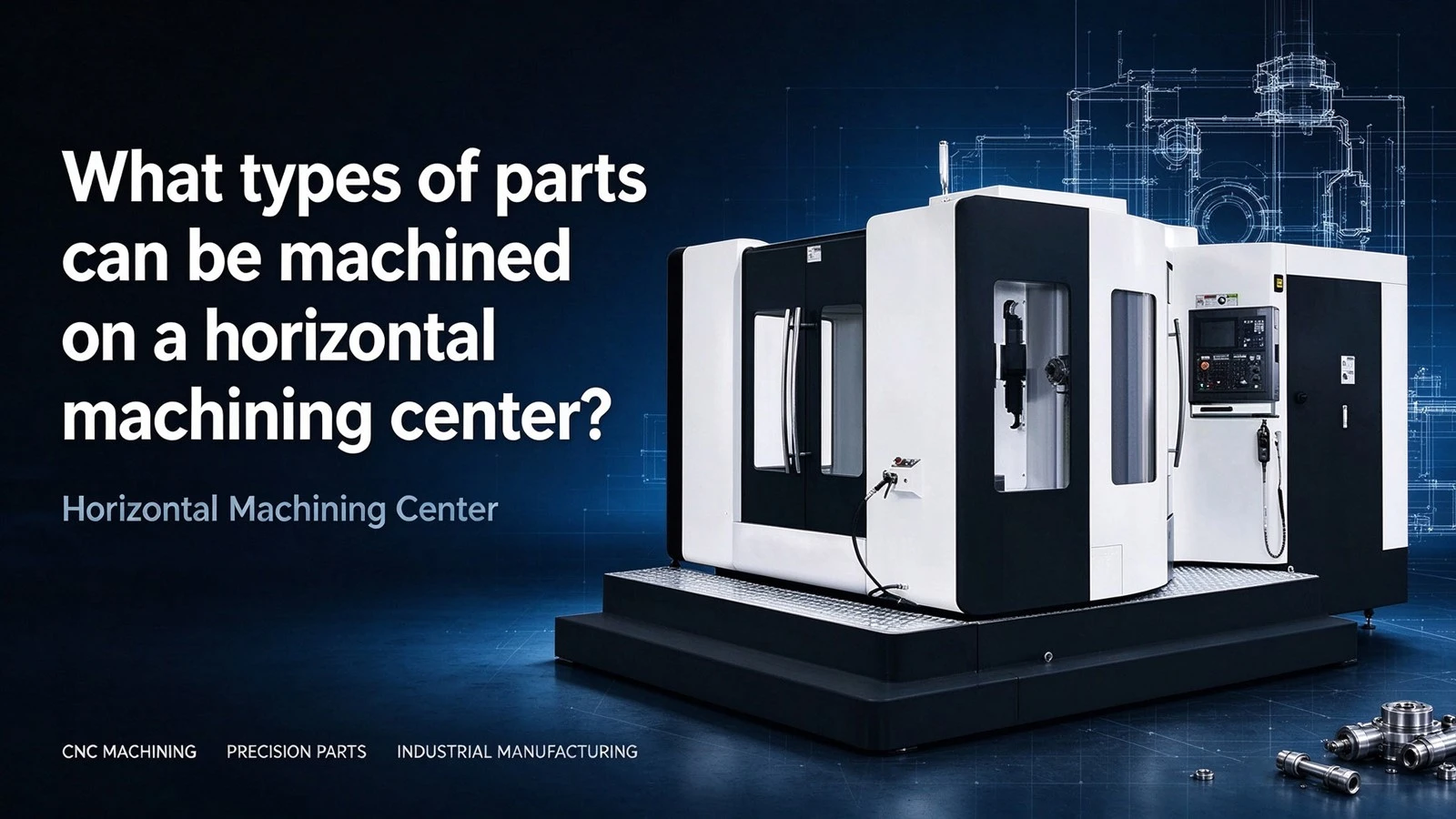
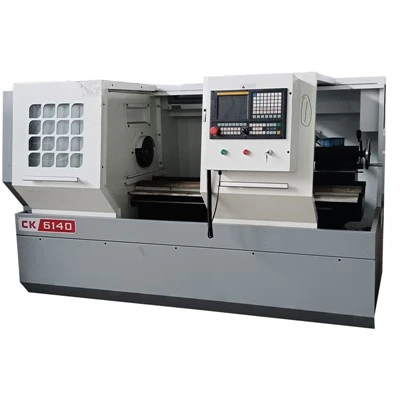
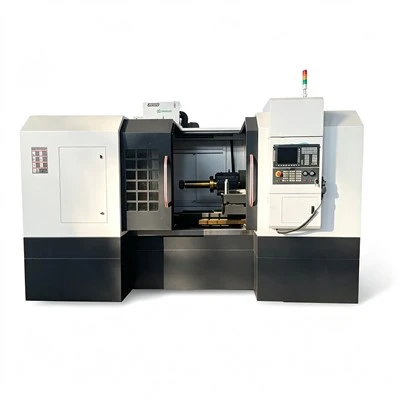
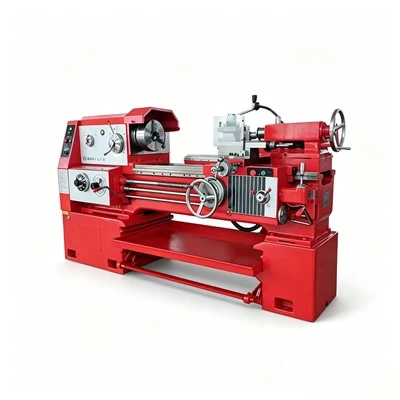
As indispensable, high-efficiency, and high-precision CNC machine tools in modern manufacturing, horizontal machining centers play a vital role across various industrial sectors thanks to their exceptional flexibility and extensive machining capabilities. They are capable of handling not only standard machining tasks but also more complex and intricate requirements. The following sections detail the types of parts these centers can machine and their applications across various fields.
I. Complex Multi-Faced Parts
One of the most notable features of a horizontal machining center is its ability to machine multiple faces and holes in a single setup-a capability particularly well-suited for complex parts featuring multiple flat surfaces and hole patterns. Critical automotive components such as transmission housings and engine blocks, for instance, present challenges for traditional machine tools due to their complex geometries, numerous machining steps, and stringent precision requirements. Horizontal machining centers, however, easily overcome these challenges through multi-axis simultaneous control, ensuring both dimensional and positional accuracy. Additionally, their rotary tables facilitate circumferential machining-such as for flanges and gear discs-thereby boosting overall efficiency.
II. Large and Heavy Workpieces
The stability and load-bearing capacity of the horizontal machining center's bed structure make it ideal for processing large, heavy workpieces. Such components often possess significant dimensions and weight, creating forces and moments during machining that traditional machine tools struggle to withstand. In contrast, the horizontal machining center-featuring a spacious worktable and a robust bed design-ensures stability and accuracy throughout the process, meeting high-precision demands. In automotive manufacturing, these centers are frequently used for large components like engine blocks and transmissions; in the aerospace sector, they are employed to machine parts such as aircraft engine turbine blades and casings.
III. High-Precision Workpieces
Equipped with advanced CNC systems and precision drive mechanisms, horizontal machining centers can achieve machining precision at the micron or even nanometer level. This capability makes them widely applicable in fields such as precision instrument manufacturing and semiconductor production. For instance, in precision instrument manufacturing, horizontal machining centers can produce high-precision optical components and precision molds; in the semiconductor sector, they can execute high-precision tasks such as cutting and grinding. Machining such high-precision workpieces requires not only high equipment accuracy but also a stable machining environment and rigorous process control-conditions that horizontal machining centers are ideally suited to meet.
IV. Workpieces with Complex Curved Surfaces
As modern industry demands increasingly complex component geometries, the multi-axis simultaneous machining capabilities of horizontal machining centers offer significant advantages for processing complex curved surfaces. By utilizing various cutting tools and fixtures, these centers can handle a wide range of tasks, from simple planar machining to the creation of complex curved surfaces. In the aerospace industry, they are used to manufacture intricate aircraft components, while in automotive manufacturing, they produce critical parts such as high-precision engine blocks and crankshafts. Furthermore, they play a vital role in mold making, capable of machining high-hardness, highly wear-resistant materials to meet the dual requirements of precision and durability.
V. Workpieces Made of Difficult-to-Machine Materials
Materials that are difficult to machine-often characterized by high hardness, toughness, and low thermal conductivity-pose challenges for traditional machining methods. Horizontal machining centers overcome these obstacles through technologies such as high-speed cutting and the use of carbide tools, enabling efficient and precise processing. In the aerospace sector, they can machine high-temperature and corrosion-resistant alloys, while in mold making, they process materials with superior hardness and wear resistance. The successful machining of these challenging materials has not only expanded the application scope of horizontal machining centers but also driven technological progress across related industrial sectors.
VI. Multi-Variety, Small-Batch Workpieces
With market demand becoming increasingly diversified and shifting toward smaller batch sizes, enterprises are increasingly favoring multi-variety, small-batch production models. Thanks to their flexibility and efficiency, horizontal machining centers can rapidly adapt to these changing production requirements. Through programming and configuration, horizontal machining centers enable automated processing and continuous production, meeting the needs for diverse product types and varying batch sizes. This flexible production approach not only boosts efficiency and reduces costs but also enhances the enterprise's market competitiveness.
In summary, horizontal machining centers hold a pivotal position in modern manufacturing due to their exceptional machining capabilities and broad range of applications. Whether dealing with complex multi-sided parts, large and heavy workpieces, high-precision components, complex curved surfaces, difficult-to-machine materials, or high-mix/low-volume production, horizontal machining centers leverage their unique advantages to successfully execute these tasks. As industrial technology continues to advance, horizontal machining centers will play an increasingly vital role in the manufacturing sector.