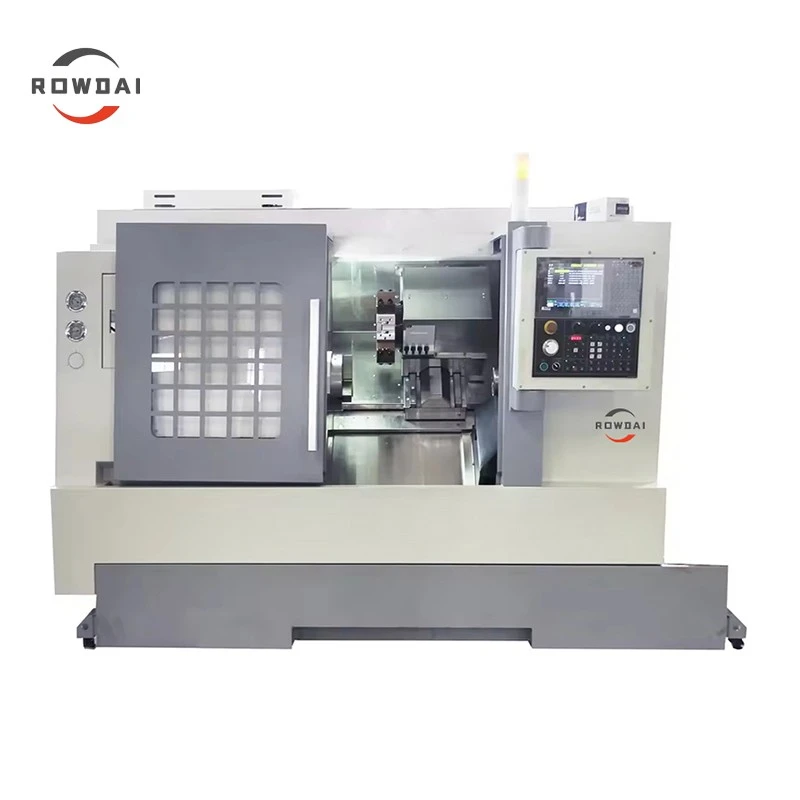
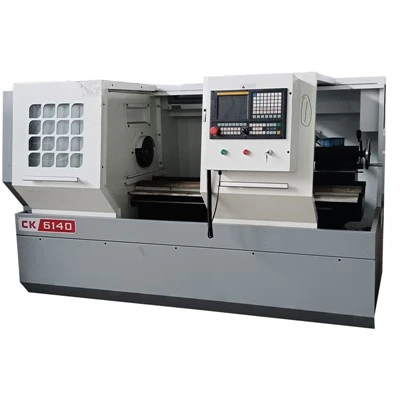
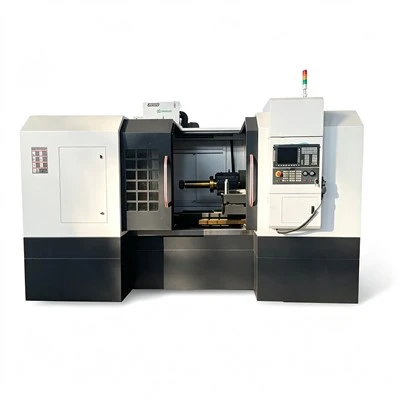
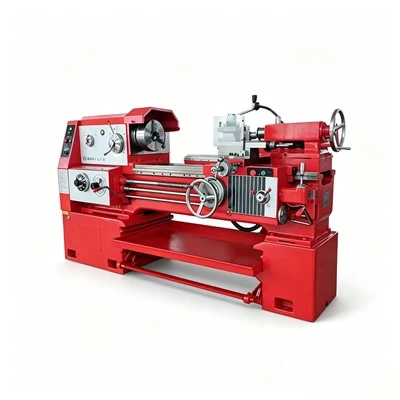
The core feature of a slant-rail CNC lathe lies in the guide rail layout of its bed. Unlike traditional flat-rail lathes where the guide rails are parallel to the ground, slant-rail lathes have guide rails at a certain angle, typically 30, 45, or 60 degrees. This structural design is not arbitrary but based on multiple engineering considerations.
Main Features and Advantages of the Slant-Rail Structure
1. Increased Rigidity and Smoother Chip Removal: The inclined bed structure allows for a larger guide rail span, thereby improving the overall rigidity of the machine tool. This effectively suppresses vibration and ensures machining stability during heavy cutting. Cutting chips are more easily detached naturally under gravity, falling directly into the chip conveyor below, preventing chip accumulation on the workpiece and tool holder areas. This not only reduces the frequency of manual cleaning but also lowers the risk of chips scratching the machined surface and helps maintain a relatively stable temperature in the cutting area.
2. Optimized Layout and Convenient Operation: The slant-rail design is usually combined with an integrated bed structure, integrating the spindle box, guide rails, tailstock, and other components onto a stable base. This compact layout reduces the machine's footprint. The control panel is typically located at the front or side of the machine tool, conforming to ergonomics and facilitating operator observation of the machining process, workpiece loading and unloading, and tool setting.
3. Application Adaptability of the Power Turret. Slant-rail CNC lathes are often combined with power turrets. The power turret not only supports conventional turning tools but can also mount rotary tools such as milling cutters and drills, enabling composite machining operations such as milling, drilling, and tapping. The slant-rail structure provides better installation and working space for the power turret, resulting in less interference during rotary machining, expanding the machine tool's process range, enabling the machining of more complex parts on a single machine tool, reducing the number of workpiece clamping operations, and improving machining accuracy and efficiency.