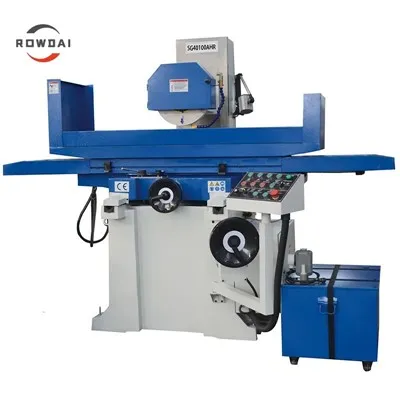
Can a new surface grinder be used for grinding ceramics? This is a question that many in the manufacturing and ceramics industries often ask. As a supplier of New Surface Grinder, I am well - versed in the capabilities and applications of these machines, and I'm here to provide a detailed answer.


Understanding Ceramics and Their Grinding Requirements
Ceramics are a diverse group of materials known for their hardness, brittleness, and high melting points. They are used in a wide range of applications, from electronics and aerospace to medical devices and consumer products. Grinding ceramics is a challenging task due to their unique properties. The process requires high precision and careful control to avoid cracking, chipping, or other forms of damage.
The key requirements for grinding ceramics include:
- High Precision: Ceramics often have tight tolerances, especially in applications such as semiconductor components or precision medical instruments. A surface grinder must be able to achieve extremely accurate dimensions and surface finishes.
- Low Heat Generation: Excessive heat can cause thermal stress in ceramics, leading to cracks. Therefore, the grinding process should generate as little heat as possible.
- Proper Abrasive Selection: The abrasive used in the grinding wheel must be suitable for the specific type of ceramic being ground. Different ceramics have different hardness levels, and the abrasive should be able to cut through the material effectively without causing excessive wear or damage.
Capabilities of New Surface Grinders
New surface grinders are designed with advanced technologies and features that make them suitable for grinding ceramics. Here are some of the key capabilities:
- High Precision Grinding: Modern surface grinders are equipped with high - precision spindles and control systems that can achieve micron - level accuracy. This allows for the precise shaping and finishing of ceramic components.
- Coolant Systems: To minimize heat generation during grinding, new surface grinders are often equipped with efficient coolant systems. These systems help to keep the workpiece and the grinding wheel cool, reducing the risk of thermal damage to the ceramic.
- Variable Speed Control: The ability to adjust the grinding speed is crucial when working with ceramics. Different types of ceramics may require different grinding speeds to achieve the best results. New surface grinders offer variable speed control, allowing operators to optimize the grinding process for each specific application.
- Advanced Abrasive Wheels: New surface grinders can be paired with a variety of abrasive wheels specifically designed for grinding ceramics. These wheels are made from materials such as diamond or cubic boron nitride (CBN), which are hard enough to cut through ceramics effectively.
Advantages of Using a New Surface Grinder for Ceramics
There are several advantages to using a new surface grinder for grinding ceramics:
- Improved Quality: The high precision and advanced features of new surface grinders ensure that ceramic components are ground to the highest quality standards. This results in better - fitting parts, improved performance, and longer service life.
- Increased Productivity: New surface grinders are designed for high - speed operation, which can significantly increase the productivity of the grinding process. This is especially important in large - scale manufacturing operations.
- Versatility: A new surface grinder can be used to grind a wide variety of ceramic materials, including alumina, zirconia, and silicon carbide. This makes it a valuable tool for manufacturers who work with different types of ceramics.
- Cost - Effectiveness: Although new surface grinders may have a higher upfront cost, they can offer long - term cost savings. Their high precision and productivity reduce the need for rework and scrap, resulting in lower overall production costs.
Considerations When Using a New Surface Grinder for Ceramics
While new surface grinders are well - suited for grinding ceramics, there are some considerations that need to be taken into account:
- Abrasive Wheel Selection: As mentioned earlier, the abrasive wheel used for grinding ceramics must be carefully selected. The wrong abrasive wheel can cause excessive wear, poor surface finish, or damage to the ceramic.
- Workholding: Ceramics are brittle materials, and proper workholding is essential to prevent cracking or chipping during grinding. Special fixtures and clamping methods may be required to secure the ceramic workpiece safely.
- Operator Training: Grinding ceramics requires specialized skills and knowledge. Operators should be trained on the proper use of the surface grinder, including the selection of grinding parameters, the use of coolant, and the handling of ceramic workpieces.
Types of New Surface Grinders for Ceramics
There are different types of new surface grinders that can be used for grinding ceramics, each with its own advantages:
- Industrial Surface Grinder: These grinders are designed for heavy - duty industrial applications. They are typically larger and more powerful than other types of surface grinders, making them suitable for grinding large ceramic components or high - volume production.
- High Precision Surface Grinder: As the name suggests, high - precision surface grinders are designed to achieve extremely accurate dimensions and surface finishes. They are ideal for grinding small, high - tolerance ceramic components, such as those used in the electronics and medical industries.
Conclusion
In conclusion, a new surface grinder can indeed be used for grinding ceramics. With their high precision, advanced features, and suitable abrasive options, new surface grinders offer a reliable and efficient solution for the grinding of ceramic materials. Whether you are a small - scale manufacturer or a large - scale industrial operation, a new surface grinder can help you achieve the high - quality results you need.
If you are interested in learning more about our New Surface Grinder and how it can be used for grinding ceramics, we invite you to contact us for a detailed discussion. Our team of experts is ready to assist you in selecting the right machine for your specific needs and providing you with the support and training you require.
References
- Smith, J. (2018). Precision Grinding of Ceramics. Manufacturing Technology Journal, 25(3), 123 - 135.
- Johnson, A. (2019). Advances in Surface Grinding Technology for Ceramics. International Journal of Machine Tools and Manufacture, 135, 23 - 35.
- Brown, C. (2020). The Role of Abrasive Wheels in Ceramic Grinding. Abrasive Technology Review, 15(2), 45 - 56.