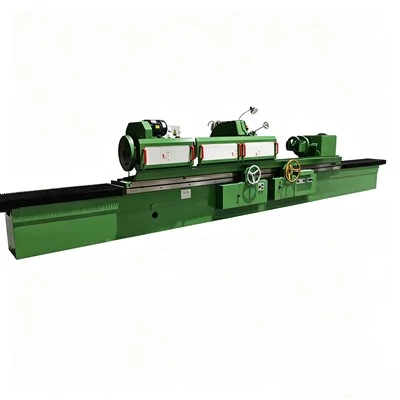
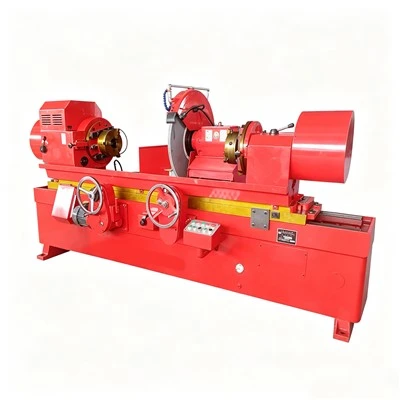
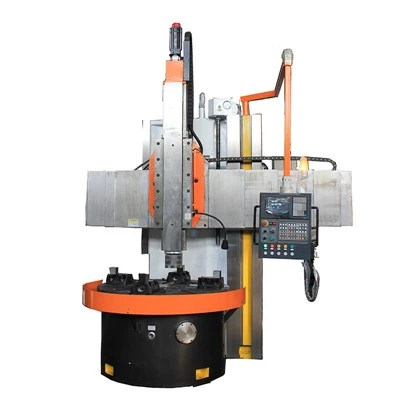
Both boring machines and drilling machines are machine tools used for hole processing. Their primary distinction lies in the cutting tools they employ: boring machines utilize boring tools to machine holes, whereas drilling machines use drill bits to drill them. More specifically, drilling machines are typically used to process holes of smaller dimensions with less stringent precision requirements; during drilling operations, the workpiece generally remains stationary while the cutting tool executes the primary rotary motion and simultaneously performs an axial feed motion. Conversely, boring machines are typically utilized for processing larger holes with higher precision requirements-particularly those distributed across different surfaces where strict demands exist regarding hole spacing and positional accuracy-such as the holes found in various gearboxes, automotive engine blocks, and similar components. Generally, the rotation of the boring tool constitutes the primary motion, while the movement of either the boring tool or the workpiece serves as the feed motion.
Functions and Application of Boring Machines
The primary function of a boring machine is to bore various holes and hole systems within a workpiece; it is particularly well-suited for machining box-like components featuring multiple holes. Additionally, it is capable of machining flat surfaces, grooves, and similar features. The primary scope of application for boring machines includes:
(1) Performing general machining operations on workpieces, such as drilling, hole enlarging, and reaming.
(2) Executing boring operations on holes or hole systems found in a wide variety of large and medium-sized workpieces.
(3) Utilizing the machine spindle to mount face milling cutters or other milling tools for the purpose of milling workpieces.
(4) On horizontal boring machines, specifically, it is also possible-by employing facing heads and other machine tool accessories-to perform specialized boring operations, such as boring large-diameter holes, machining large end faces, cutting grooves, and threading.
What are the basic components of a standard horizontal boring machine?
A standard horizontal boring machine typically consists of the bed, column, headstock, spindle, facing head, worktable, upper saddle, lower saddle, rear column, and rear column support, among other components.
What are the structural characteristics and basic components of a floor-type boring machine?
A floor-type boring machine is designed for machining large parts and heavy machinery components. Its structural characteristics are as follows: generally, it does not feature a worktable; instead, the workpiece is clamped onto a large floor plate that is separate from the machine tool itself. It lacks a worktable feed mechanism; the headstock and column are mounted on a saddle, which is capable of traversing along the guideways of the bed.
A typical floor-type boring machine consists of the bed, column, headstock, saddle, facing head, and floor plate, among other components.